Hydrogen water: what the studies say, real risks and practical guide 2026
Hydrogen water is ordinary water enriched with molecular hydrogen (H₂), in the form of dissolved gas. It differs from tap water or spring water by its concentration of active H₂ - a molecule whose selective antioxidant properties have been the subject of more than 1,000 scientific studies since 2007. A figure that surprised me at first, I admit, when I started digging into the subject seriously. And the more you read, the more you understand why research got so excited about this topic.
As an agricultural engineer specialised in water management since my training at ISTOM in 1997, I have been following this subject for several years. And frankly, the work on molecular hydrogen is among the most interesting - and the most poorly popularised - that I have come across in the field of hydration and nutrition.
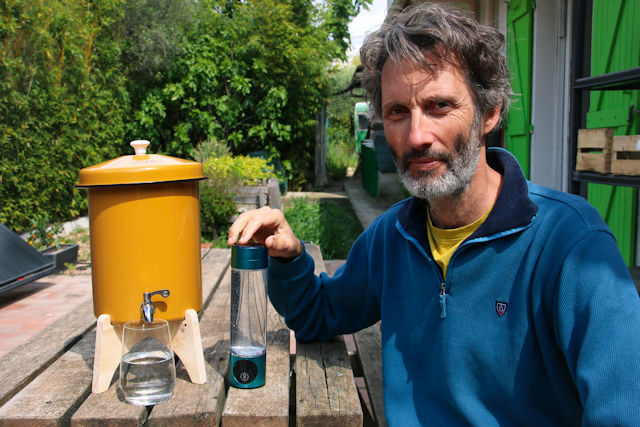
Here is how our practice has evolved at home, with Aurélie:
We first opted for an Ecofiltro filter to purify tap water - ceramic filter, no plastic in the chain, simple maintenance
Then we added a Mizora generator to enrich this filtered water with active molecular H₂
This combination seemed the most coherent to us: filtration first, hydrogenation second - each tool does what it was designed for
In concrete terms, why this approach in 2026? Microplastics in drinking water are now documented in almost every municipal network in Europe. The basic quality of the water we drink can no longer be taken for granted. And if you add the lines of research opened up on molecular hydrogen, you understand why this question goes well beyond a lifestyle gadget.
In this article, I explain everything - what the studies really show, the mechanisms studied, but also the potential risks, contraindications and dosage. Because these questions deserve an honest answer, not an evasive one.
What is hydrogen water?
Hydrogen water - sometimes called hydrogen water, H₂-enriched water or hydrogen-energised water - is water in which molecular hydrogen gas (H₂) has been dissolved under pressure. Nothing mysterious about it: it is ordinary water to which a natural, colourless, odourless and harmless gas is added.
One clarification I must make right from the start, because this mistake still circulates widely on the web: hydrogen water is enriched with H₂ (molecular hydrogen), not H⁺. H⁺ is a proton - a hydrogen ion. H₂ is a diatomic gas molecule. These two chemical entities have nothing in common biologically. Confusing the two is a bit like confusing the oxygen you breathe (O₂) with hydrogen peroxide (H₂O₂). The distinction is fundamental to understanding the properties of this type of water.
The concentration used in studies is generally above 0.5 ppm (500 ppb) - the threshold from which several clinical studies have observed changes in certain markers of oxidative stress. Quality generators regularly produce concentrations above 1,000 ppb, i.e. twice this threshold.
Very specific antioxidant properties
What makes H₂ particularly interesting is its selectivity. Unlike conventional antioxidants (vitamin C, polyphenols, zinc…) which neutralise free radicals fairly indiscriminately, molecular hydrogen is thought, according to laboratory work, to react preferentially with the most reactive radicals - notably the hydroxyl radical (•OH) and peroxynitrite (ONOO⁻) - without disturbing the "useful" radicals involved in normal cell signalling, notably hydrogen peroxide (H₂O₂) and superoxide (O₂⁻), which act as messengers in immune defences (Ohta, 2011).
It is this selectivity, observed in the laboratory, that interests researchers so much.
Reduced surface tension?
Hydrogen water is also said to have a lower surface tension than ordinary water, which, according to some authors, could make it easier to pass through cell membranes. This is a hypothesis, not an established effect in humans, but it is of great interest to athletes.
Understanding the studied antioxidant activity of molecular hydrogen
The mechanism proposed by researchers for H₂ in relation to oxidative stress is often poorly explained. Here it is, in four steps:
Production of free radicals in the mitochondria. During energy production (ATP), mitochondria generate oxidative by-products - it is unavoidable, it is the price of aerobic life.
Accumulation of hydroxyl radicals. In situations of stress, intense effort or accelerated cellular ageing, these radicals accumulate and begin to damage DNA, membrane lipids and cellular proteins.
Selective neutralisation by H₂. In the laboratory, molecular hydrogen reacts directly with hydroxyl radicals and peroxynitrites - the most destructive ones - to turn them into water, or into nitrogen and water. Two completely harmless molecules.
Preservation of "useful" radicals. H₂O₂ and O₂⁻, which play signalling roles in immune defences, are not affected. That is the whole difference with broad-spectrum antioxidants.
In summary: according to this work, molecular hydrogen is thought to behave as a selective antioxidant, whereas vitamin C or vitamin E act more broadly.
What research has studied about molecular hydrogen
More than 1,000 scientific studies published since 2007 - including more than 200 since 2020 - have explored the effects of molecular hydrogen in more than a hundred different disease models. The Molecular Hydrogen Institute (MHI), which centralises this body of literature, makes it one of the densest corpora for such a young field.
Among the most studied lines of research:
Oxidative stress: a decrease in certain biological markers has been observed in several trials (Ohta, 2011; Nakao et al., 2010)
Post-exercise recovery: studies have observed lower levels of lactic acid and of certain muscle markers in athletes (LeBaron et al., 2019)
Nervous system: exploratory work in mice has studied molecular hydrogen in a Parkinson's disease model (Sobue et al., 2011) - preliminary results, to be interpreted with great caution
Carbohydrate metabolism: the study by Kajiyama et al. (2008), conducted in people with type 2 diabetes or glucose intolerance, observed a change in certain markers - small cohort, results to be confirmed
Inflammation: several animal studies and human pilot studies have observed a modulation of certain cytokines (Ito et al., 2011)
⚠️ A point of honesty is needed here: most of these studies concern animal models or small human cohorts. The body of research is abundant - 1,000 studies is no small thing - but large-scale randomised studies in humans are still relatively few. When I say "studies suggest" or "preliminary results indicate", these are not stylistic precautions. They faithfully reflect the current state of science.
Hydrogen water and cellular hydration: what we really know
Hydration is perhaps the most concrete angle for understanding why hydrogen water interests populations as different as top-level athletes, older people in South Korea and preventive medicine researchers in Japan.
South Korea is today one of the most mature markets for home hydrogen water generators. This is no coincidence: in a culture where preventive medicine and functional food are deeply embedded in daily habits, quality water is considered a basic pillar - just like optimal hydration adapted to the seasons.
What we know with more certainty: H₂ dissolved in water, thanks to its small molecular size (0.3 nanometres), passes freely through lipid membranes - where larger molecules such as vitamin E or CoQ10 struggle to penetrate. This physical property theoretically explains why molecular hydrogen can reach the hardest-to-access cell compartments, notably the mitochondria, which are precisely the main site of intracellular oxidative stress.
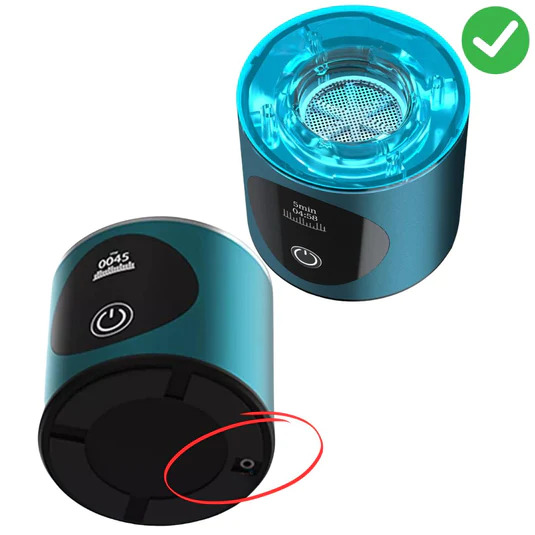
When travelling, Aurélie and I always use the portable Mizora. Five minutes in the hotel room, and the water produced is charged with active H₂. We picked up this habit a few years ago. And frankly, we could no longer imagine leaving without it.
A closer look at hydrogen water and the cell membrane
The size of the H₂ molecule - 0.3 nanometres - is decisive for understanding its biological interest. For comparison: vitamin C measures about 0.5 nm, vitamin E exceeds one nanometre, and CoQ10 is even larger. Molecular hydrogen is therefore, by far, the smallest of the known molecules with antioxidant activity.
This small size allows it to pass freely through cell membranes - including mitochondrial membranes, which usually form a very strict selective barrier. According to several studies, including the reference work by Ohta (2011), H₂ molecules show better cell penetration properties than some conventional antioxidants, which explains researchers' interest in its role in relation to mitochondrial oxidative stress.
And it is precisely in the mitochondria that most intracellular oxidative stress occurs - where ATP production generates the most reactive by-products. Reaching this site with precision is a property that very few molecules can claim.
What studies have observed with hydrogen water
Beyond the mechanisms, let's talk about what has been observed in research protocols. This is where the questions become concrete.
On sports performance and recovery: the review by LeBaron et al. (2019) summarises trials that observed a decrease in certain markers of inflammation and oxidation after exercise in athletes who drank hydrogen water. Lower lactic acid levels are among the most frequently reported observations - a very concrete parameter for anyone who trains regularly. See also our comparison on the subject in the We tested it for you section.
On skin and cellular ageing: the study by Kato et al. (2012) explores the effects of warm hydrogen water on wrinkle formation and collagen production - in vitro results to be confirmed.
On systemic inflammation: several studies, mainly in animals, have observed a modulation of certain cytokines (Ito et al., 2011; Asada et al., 2014). To be clear: these observations do not make hydrogen water a treatment. They are research data, not therapeutic data.
Are there side effects of hydrogen water?
The short answer: to date, no clinical study has identified serious side effects linked to drinking hydrogen water. Hydrogen gas is recognised as GRAS (Generally Recognized As Safe) by the US FDA for supplementation via enriched water (FDA GRAS Notice GRN 000553, 2014). Some users report mild, transient gastrointestinal discomfort when they first drink it - bloating, a slight feeling of gas. This generally disappears within a few days. Nothing to worry about.
Hydrogen water: precautions, contraindications and dosage
This is the section that was missing from the previous version of this article - and the one many readers are looking for when they arrive here. I'll be direct: hydrogen water is remarkably well tolerated in studies. But that does not mean there are no precautions to take.
What dosage for hydrogen water?
Clinical trial protocols converge on a consumption of 1 to 3 glasses a day, i.e. 200 to 500 ml per serving. The most studied times:
In the morning on an empty stomach - for rapid absorption before the first meal
Before or after physical exercise - when researchers measure the oxidative stress markers linked to exercise
One non-negotiable point: drink the water within 30 minutes of its production. Dissolved hydrogen gas escapes quickly if the container is not hermetically sealed. After 30 minutes in an open glass, the concentration of active H₂ drops drastically.
Are there any contraindications?
No formal contraindication has been established to date in the available clinical literature. That said, as a precaution:
Pregnant or breastfeeding women: the data are insufficient to conclude on safety - consult a doctor before any use
People undergoing medical treatment: not recommended without prior medical advice, as possible interactions with certain medicines have not been studied
No known drug interaction has been documented to date in the scientific literature
Where to find hydrogen water?
Hydrogen water is available in pharmacies and specialist shops in hermetically sealed cans - practical for trying it out, expensive in the long run and a source of packaging waste. For daily use, home production with a PEM membrane generator remains the most economical, most ecological and most reliable solution in terms of active H₂ concentration.
Producing hydrogen water at home and on the move
This is a subject that has fascinated me for several years. I tested different technologies before settling on PEM membrane generators - and I will explain why I made this choice.
PEM membrane technology: the current standard
The PEM membrane (Proton Exchange Membrane) is a technology originally developed by DuPont for industrial applications (fuel cells, industrial electrolysis). Applied to the production of hydrogen water, it makes it possible to obtain a very high concentration of dissolved H₂ - often above 1,000 ppb - while separately venting the unwanted gases generated by electrolysis: chlorine, ozone, hydrogen peroxide. It is this dual performance that makes it the technical benchmark today.
How does a hydrogen water generator work?
The cycle is easy to understand:
Filtered water is fed into the electrolysis chamber
An electric current splits some of the water molecules (H₂O → H₂ + O)
The PEM membrane captures the H₂ and dissolves it in the water, while the unwanted gases are vented separately through a dedicated chamber
After 5 to 10 minutes, the water is charged with active H₂, at a concentration comparable to that used in studies
The demonstration I like to cite: Tyler LeBaron, founder of the Molecular Hydrogen Institute, carried out a test with the H2blue colorimetric reagent, which turns blue in the presence of dissolved H₂. The video below - which I recommend to all sceptics - perfectly illustrates the real, measurable presence of molecular hydrogen in the water produced.
Important practical tip: use filtered water as the generator's input - for example via an Ecofiltro ceramic filter. A generator enriches water, it does not filter it. The order of operations is therefore non-negotiable: filtering out contaminants first, hydrogenation second.
For lovers of outdoor activities and water filtration while hiking, portable Mizora generator models let you take this practice anywhere.
Different types of water and their impact on general health
One question comes up often, and it is a legitimate one: what is the difference between hydrogen water and the other "functional" waters on the market? The confusion is real, fuelled by sometimes creative marketing.
Hydrogen water vs alkaline water: two very different things
These are two distinct products, often wrongly confused. Alkaline water has a high pH (8 to 10), obtained by ionisation, but does not necessarily contain dissolved molecular hydrogen. Hydrogen water, on the other hand, is enriched with H₂ - and it is this molecular hydrogen that researchers study, not the pH. Some ionisers produce both at the same time, but the properties studied scientifically concern H₂ specifically, not alkalinity. For a complete overview of filtration and enrichment systems, our comparison filter jug or reverse osmosis system will give you a useful frame of reference.
Hydrogen water vs sparkling water
Sparkling water is enriched with CO₂ (carbon dioxide) - a different gas, with no documented antioxidant property. Acidifying for tooth enamel in the long term, it has no biological connection with dissolved H₂. There you go, it's as simple as that.
Hydrogen water vs reverse osmosis water
Reverse osmosis produces very pure water, rid of most contaminants. An excellent base for a generator, but it does not contain active H₂ in itself. Studies on hard water and health also show that water mineralisation has its own effects to consider - an additional variable in the equation.
As for the medical claims circulating elsewhere: no, hydrogen water is not a treatment for cancer, diabetes or cardiovascular disease. The studies concern markers of oxidative stress observed in certain metabolic conditions - that is a fundamental difference. This research, although promising, does not constitute medical treatment and must not replace appropriate medical follow-up.
Why choose a system that vents harmful gases?
This is a technical question with a very practical answer. During the electrolysis of water, even with a PEM membrane, unwanted gases form. A poorly designed generator can dissolve them in the final water - which you absolutely want to avoid.
Why get rid of chlorine?
Chlorine (Cl₂) forms during the electrolysis of the chloride ions present in tap water. Even in low concentrations, it alters the taste and has documented undesirable effects on gut health in the long term. A separate gas venting system ensures that the water produced contains only active H₂.
Hydrogen peroxide: to be avoided in drinking water
Hydrogen peroxide (H₂O₂) can form during certain types of electrolysis. In drinking water, it is a powerful oxidant - exactly the opposite of what we are trying to achieve. Generators fitted with a PEM membrane and a separate venting chamber deal with this issue effectively.
And ozone?
Ozone (O₃) is an oxidising gas produced during certain types of electrolysis. Useful for industrial disinfection, it has no place in drinking water enriched with H₂. A well-designed generator vents it separately - and that is a non-negotiable selection criterion.
Why the Mizora system
After testing several generators available on the market - and I really did, in our premises in Nîmes, over several months -, the Mizora Pro hydrogen water generator stood out on several objective criteria: measured H₂ concentration, quality of the PEM membrane, robustness under intensive daily use, and an effective gas venting system.
What I particularly appreciate in this set-up: the possibility of using it downstream of an Ecofiltro filter. Ceramic filtration first (Ecofiltro), hydrogenation second (Mizora). Each appliance does what it does best. Our complete test of the Ecofiltro after 6 months of use details the results of this combo if you want to go further.
For those who want to try it: use the promo code BIOVIE on the Mizora website to get a €31.25 discount. And for the question that comes up often - why does Biovie recommend this product? Because we use it. It's as simple as that.
If you are still hesitating over which filtration system to choose upstream, our guide how to filter tap water reviews the different solutions available for every budget.
Frequently asked questions about hydrogen water
What exactly is hydrogen water?
Hydrogen water is ordinary water enriched with molecular hydrogen (H₂), a gas naturally present in water but in tiny quantities. It is obtained by electrolysis via a PEM membrane, which dissolves H₂ in the water without changing its taste or pH. Its selective antioxidant properties have been the subject of more than 1,000 scientific studies since 2007. Not to be confused with H⁺ (a proton): these are two unrelated chemical entities.
What do scientific studies say about hydrogen water?
Clinical and preclinical studies have mainly explored three lines of research: the reaction of H₂ with hydroxyl radicals (the most reactive), physical recovery after exercise and certain markers of inflammation. Preliminary work, often in animals, has also looked at the nervous system and carbohydrate metabolism. Most of these studies concern small cohorts - the body of research is promising but large-scale studies are still needed.
What are the risks and side effects of hydrogen water?
To date, no clinical study has identified serious side effects. The US FDA recognises hydrogen supplementation via enriched water as generally safe (GRAS, Notice GRN 000553, 2014). Some users report mild, transient gastrointestinal discomfort (bloating, gas) when they first drink it - generally a passing phenomenon. As a precaution, pregnant or breastfeeding women and people undergoing medical treatment are advised to consult a doctor before use.
How many times a day can you drink hydrogen water?
Most clinical studies use a consumption of 1 to 3 glasses a day (200 to 500 ml per serving). Hydrogen water is ideally drunk within 30 minutes of its production, because molecular hydrogen escapes quickly from an open container. In the morning on an empty stomach and before or after physical exercise are the times most used in research protocols.
How do you make hydrogen water at home?
The most effective and reliable method is to use an electrolysis generator fitted with a PEM (Proton Exchange Membrane). This system produces H₂-concentrated water in 5 to 10 minutes while venting the unwanted gases (chlorine, ozone, hydrogen peroxide) through a separate chamber. It is strongly recommended to use filtered water beforehand (a ceramic filter, for example) to get the best quality at the generator's input.
Is hydrogen water different from alkaline water?
Yes, they are two distinct products that are often confused. Alkaline water has a high pH (8 to 10), obtained by ionisation, but does not necessarily contain dissolved molecular hydrogen. Hydrogen water is enriched with dissolved H₂ - it is this molecular hydrogen that researchers study, not the pH. Some ionisers produce both at the same time, but the properties studied scientifically concern H₂ specifically, not alkalinity.
Opt for an organic, healthy and chlorine-free shower thanks to the integral water filter without cartridges with retro-cleaning system. Filtration and dynamization., 20
products
Kamimura, N. et al. (2011). "Molecular hydrogen improves obesity and diabetes by inducing hepatic FGF21 and stimulating energy metabolism in db/db mice". Obesity, 19(7), 1396-1403. (animal study)
Kato, S. et al. (2012). "Hydrogen-rich electrolyzed warm water represses wrinkle formation against UVA ray together with type-I collagen production and oxidative-stress diminishment in fibroblasts and cell-injury prevention in keratinocytes". Medical Gas Research, 6(1), 7-15. (in vitro study)
Sobue, S. et al. (2011). "Inhalation of hydrogen gas reduces editability of the intestinal flora in a mouse model of Parkinson's disease". Movement Disorders, 26(11). (exploratory pilot study - preliminary results)
Huang, L. et al. (2010). "Hydrogen inhalation ameliorates ventilator-induced lung injury". Peritoneal Dialysis International. (animal study)
Shingu, C. et al. (2010). "Hydrogen-enriched epidermal saline attenuates ultraviolet B-induced DNA damage in hairless mice". Am J Respiratory Critical Care Medicine. (animal study)
Asada, R. et al. (2014). "Hydrogen-water enhances 5-fluorouracil-induced inhibition of colon cancer". Experimental Biology and Medicine. (animal / in vitro study)
FDA GRAS Notice GRN 000553 (2014). Hydrogen gas for use in hydrogen-enriched water. U.S. Food and Drug Administration. FDA GRAS Inventory.
Updated: October 2026. Article validated by Éric Viard, founder of Biovie and ISTOM engineer, class of 1997, specialised in water management. Passionate about the science of water for 27 years. Co-author of "Algues au quotidien" (Gallimard, 2024) - Best Cookbook in the World, Gourmand Cookbook Awards 2025, and Best Cookbook in France, Académie Nationale de Cuisine 2025.
Disclaimer: The information in this article is provided for information purposes only and does not constitute medical advice. Consult a qualified health professional before making any change to your diet or supplementation. As part of a varied and balanced diet and a healthy lifestyle.
All our products in this department are gathered in our Water filters range.