










The Brazil nut ,also called nut Amazonia ,are native to South America: Brazil, Peru, and Bolivia. The Brazil nut tree is the tree that produces the fruit of the nut of Amazonia. They are produced in the tropical forests from South America, particularly in the Amazon rainforest. It's a fruit Dry oilseeds with a creamy texture and a rich, delicious taste that make them popular in cooking recipes, snacks, and desserts-your taste buds will be delighted! However, beyond their delicious flavor, the Brazil nut are also notable for their selenium content. In this article, we explore the origins of this fruit dry, their consumption, their nutritional contribution, as well as a delicious recipe dedicated to food lovers for preparing the nut of Amazonia.
What is the origin of the nut of Amazonia ?
The nut Amazonia are native to the Amazon regions of Brazil, Bolivia, and Peru, they are produced in the tropical forests. . The trees producing these nut, called Bertholletia excelsa, are among the largest of the Amazon rainforest, reaching up to 50 meters in height. We will have to wait 12 years for this gigantic tree to give us its first fruits.
The Brazil nut are contained in a hard, woody shell that resembles a nut of coconut, which can be opened to reveal the seeds inside that encase the precious nuggets. Regarding the fruit harvest, you might wonder how it will be done since the tree is 45 times the size of a human, which makes things even more complicated! But nature is well-designed; the harvest is done by nut gathering fallen to the ground when they become ripe.
The indigenous populations of the Amazon region have consumed the nut Amazon for centuries, considering them as a staple food in their nutrition. . Today, these nut are exported worldwide and are appreciated for their rich and buttery flavor.

How to eat the nut of Amazonia ?
There are several ways to consume nut Amazonia, in function of your personal preferences. Here are some ideas:
As a snack: The nut from the Amazon are delicious, just as they are. You can snack on them by enjoying them raw or roasted, according to your tastes and preferences.
In cooking recipes: This section is dedicated to people who dare to taste new flavors and try new recipes: the Brazil nut can be used in various culinary preparations to add texture to your recipes, including salads, soups, sauces, as well as desserts like raw tarts and brownies because they are sweet.
nut butter The nut from the Amazon can be transformed into a rich and creamy spread, similar to peanut butter. You can use it as a topping for toast, crepes, or fresh fruit.
In smoothies: You can add the Brazil nut to your favorite smoothies to give them more texture. Simply blend them with the other ingredients of your smoothie until they are well mixed.
Our delicious recipe for preparing the nut of Amazonia ?
Here is an easy and delicious recipe to test the nut of Amazonia:
Ingredients:
- 1 cup of nut of Amazonia, raw
- 1 tablespoon of coconut oil
- 1 teaspoon of salt
Instructions:
- Rinse the nut "from the Amazon to cold water and drain them."
- nut In a bowl, add the coconut oil and salt. Mix well so that the nut "be well coated."
- Spread the nuts in a single layer on a baking sheet lined with parchment paper or in a food dehydrator.
- Let the nuts dry for about 8 hours or until they are crispy.
- Store the coconut-flavored Brazil nuts in an airtight container at room temperature.
Share this article
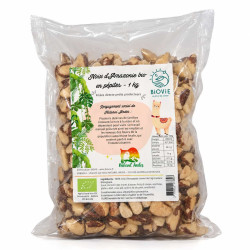
Organic and Fair Trade Brazil Nuts 1kg
€31.20 In stock
These raw Amazonian nuts can be enjoyed as a snack, as an appetizer, in smoothies, in cereal dishes for extra crunch, or added to salads.

At what time of the day should you eat Brazil nuts ?
There is no special time to consume Brazil nuts; you can eat them at any time of the day according to your personal preferences. However, it is important to remember that Amazonian nuts are rich in fats and calories (like most nuts), so it is best to incorporate them into a balanced diet and avoid excessive consumption.
Some people prefer to consume them in the morning Others prefer to eat them in the afternoon as a snack Ultimately, the ideal time of day to eat Brazil nuts depends on your schedule and dietary preferences.
How many Brazil nuts per day ?
This is the question often asked by people who love Brazil nuts! Generally, the recommended daily amount for consumption is 4 to 5 nuts per day This fruit is known for containing a high amount of selenium, a mineral that contributes to the normal functioning of the immune system and to protecting cells against oxidative stress.
Overconsumption of Brazil nuts can also become very toxic for the body due to the same selenium, when ingested in large quantities. A high selenium content can notably cause nausea, diarrhea, fatigue and hair loss.
So, you can enjoy your favorite dried fruits while being careful not to eat more than about ten per day !

What is the composition of the Brazil nut?
Here are the main constituents of Brazil nuts (also called Amazon nuts):
An excellent source of selenium: Brazil nuts are very rich in selenium, an essential mineral. Selenium contributes to normal thyroid function; a single nut provides 68 to 91 µg, which is more than the NRV (55 µg). A single Brazil nut can provide the recommended daily intake of selenium, thanks to its high selenium content.
Fatty acids: Brazil nuts contain monounsaturated and polyunsaturated fatty acids.
The full range Oilseeds, nuts, seeds
Fair trade tiger nut from Niger, Amazon nuts from Bolivia, activated buckwheat from Brittany, and activated oilseed purées made in Alsace by Kaly: this range brings together oilseeds and seeds of raw quality, most of them soaked then dehydrated at low temperature (activation). To get started with activation, an activated almond or hazelnut purée is easier to use than a whole oilseed you have to soak yourself. For everyday raw cooking, tiger nut (whole, sliced or as a purée) comes in several formats suited to different uses, from homemade plant milk to crunchy snacks., 20 products
Discover the full range


What are the dangers and contraindications ?
Although Brazil nuts are rich in nutrients beneficial to health, there are a few precautions to consider:
- The nut Amazonian nuts can cause allergic reactions in some people, particularly those who have allergies to tree nuts, and more generally to nut. . Symptoms may include rashes, itching, hives, swelling of the lips, tongue, and throat, nausea, vomiting, and difficulty. respiratory. . People with food allergies need to be aware of this possibility and avoid the nut consumption from Brazil.
- As mentioned a little earlier, these oilseeds are excellent source of selenium, but can be harmful if it exceeds its daily dose. The lethal dose of selenium is 1,000 µg per day, which is a nut The Amazon contains 68 to 91 µg, which is more than sufficient for our health. The symptoms of excessive consumption of Brazil nut are nausea, diarrhea, fatigue, and hair loss.
- Brazil nuts contain protein but also a lot of fat: it is a high-calorie snack. It is therefore important to include them in a balanced diet and to avoid overconsumption.
- They contain some vitamin K, which can interfere with certain anticoagulant medications. People taking anticoagulant medications should be aware of this possibility and discuss it with their doctor before consuming any. nut of Amazonia.
- The Brazil nut mold quickly, this mold is very toxic to the liver. It could therefore become dangerous to consume, so be careful with storage as they tend to go rancid quickly.

